Almost all of Day of the Dead in Oaxaca is free. The cemeteries charge nothing, the comparsas charge nothing, the sand carpets and the altars and the brass bands in the street charge nothing. The only things you will actually pay for in the last week of October and the first days of November are a bed, the ride home from a village cemetery at two in the morning, food, and face paint if you want it. This post is the free list, with the dates, the places and the few numbers worth knowing, written at reception three weeks before it starts.
If you need the overall shape of the week first – which night is which, how the cemeteries work, what to pack – read our backpacker’s guide to Day of the Dead 2026. This one is only about doing it on very little money.
What is free, night by night
The religious calendar is fixed and does not move: 31 October is the vigil for children who have died, 1 November is Todos Santos for the adults, 2 November is the day families eat at the graves. In 2026 that falls on a Saturday, a Sunday and a Monday, which is the best possible arrangement for anyone travelling.
| Date (2026) | Free thing | Where |
|---|---|---|
| Tue 27 – Fri 30 Oct | Altars going up in shops, markets, museums and public buildings. Sand carpets (tapetes de arena) appear. Comparsas start in the barrios most evenings after dark. | Centro, Jalatlaco, Xochimilco, Plaza de la Danza |
| Fri 30 Oct | In the last edition the state ran a street verbena from 18:00 in the pedestrian streets beside the Palacio de Gobierno. Check this year’s programme. | Around the Zócalo |
| Sat 31 Oct | The vigils. Candles from about 21:00 until dawn in the two cemeteries of Santa Cruz Xoxocotlán and on the hill at Santa María Atzompa. | Xoxocotlán, Atzompa |
| Sun 1 Nov | Tlacolula’s weekly market in the morning. The Panteón General vigil in the city at night, with a cultural programme inside the cemetery. The muerteadas in the Etla villages run from late evening until sunrise. | Tlacolula, Panteón General, San Agustín Etla |
| Mon 2 Nov | Families at the graves in daylight, bands playing, food shared between tombs. The quietest and least touristed day to see it. | Any village cemetery |
Two things on that table are worth saying plainly. Comparsa times are not published anywhere. They are decided by the barrio, announced by rocket and spread by word of mouth, so the only reliable method is to ask someone who lives here on the day. And the state programme – usually well over a hundred activities, nearly all of them free – lands around the middle of October, not before. The Oaxaca state government site publishes it; last year’s edition included a Convite parade on 1 November at 18:00 from the Fuente de las Ocho Regiones to the Alameda de León, a tapete de arena in the church atrium in Jalatlaco from 26 October to 3 November, and free concerts at 20:00 in the Alameda and the Barrio de Xochimilco. Treat all of that as likely but unconfirmed for 2026 until the programme is out.
Check beds at Maka This week’s activities
The cemeteries cost nothing to enter
This is the part people get sold. Entry to every cemetery in the valley is free. There is no ticket, no wristband, no queue you can pay to skip. What a tour sells you is a van, a guide and someone to worry about the ride home, which can be worth it on 31 October but is not access.
Getting there yourself, checked on 6 October 2026:
- Panteón General, in the city itself, east of the centre. Walk. Twenty minutes from the Zócalo and free in every sense. Its night is 1 November.
- Xoxocotlán, ten to twenty minutes south. Colectivos marked Xoxo leave from the stands near the Periférico and the Abastos market for about 15 to 20 pesos per person. Ask for the panteón. Going out is easy; coming back after midnight is when you pay, because taxis know what the night is worth. Expect 150 to 250 pesos for the car and split it four ways.
- Santa María Atzompa, northwest, same idea and a fraction of the crowd. The candles seen from the hill are the better photograph.
- San Agustín Etla, for the muerteada on the night of 1 November. Colectivos charge around 15 pesos per person from the authorised stands on Prolongación de Valerio Trujano near the Central de Abastos; a private taxi is about 200 pesos. Nothing public runs at three in the morning, so agree the return with a driver before you go up, or go with people who are coming back at the same time as you.
Carry coins. Some village cemeteries ask visitors for a small cooperación at the gate for the upkeep of the place, and twenty pesos in your hand is the right answer to that.
Free all week, not just on the big nights
If you arrive on the 27th and the comparsas have not started, the city still has a free day in it.
Museums and cultural centres that do not charge
The Centro Fotográfico Manuel Álvarez Bravo on Murguía is free, and listings show it open Wednesday to Monday, 10:00 to 20:00. The Museo Textil de Oaxaca is free. The Centro Cultural San Pablo is free, and its altar is usually one of the best in the centre. Opening hours shift around the holiday, so look at the door or the sign on the way past rather than trusting any of us, this post included.
Markets
The Mercado de Abastos in the last week of October is the event itself, not a stop on the way to it: aisles of cempasúchil, sugar skulls, copal, chocolate and pan de muerto with the painted face on top. Walking through costs nothing. Go in the morning, go with someone, keep your phone in a front pocket. On Sunday 1 November the weekly market at Tlacolula runs as normal, which is an unusual chance to see a valley market and a cemetery town on the same day; we run a trip there on Sundays at 09:00 if you would rather not work out the second-class bus, and the current price is on our activities page.
The street
Santo Domingo, the Alcalá after dark, the bands on the Zócalo, the facade competition in the Centro Histórico, the sand carpets on the Plaza de la Danza, and the altars in half the doorways in the centre. None of it costs anything and most of it is better than the paid version.
What you will actually spend money on
Rough numbers, early October 2026, for the things that are not free. Everything in Oaxaca drifts upward during this week, so treat them as a floor, not a quote.
| Item | Roughly (MXN) | How to pay less |
|---|---|---|
| Colectivo to a village cemetery | 15-20 each way | Only runs in the evening; it is the cheap half of the trip |
| Taxi back at night | 150-250 per car | Agree the price before the door closes, and fill the car |
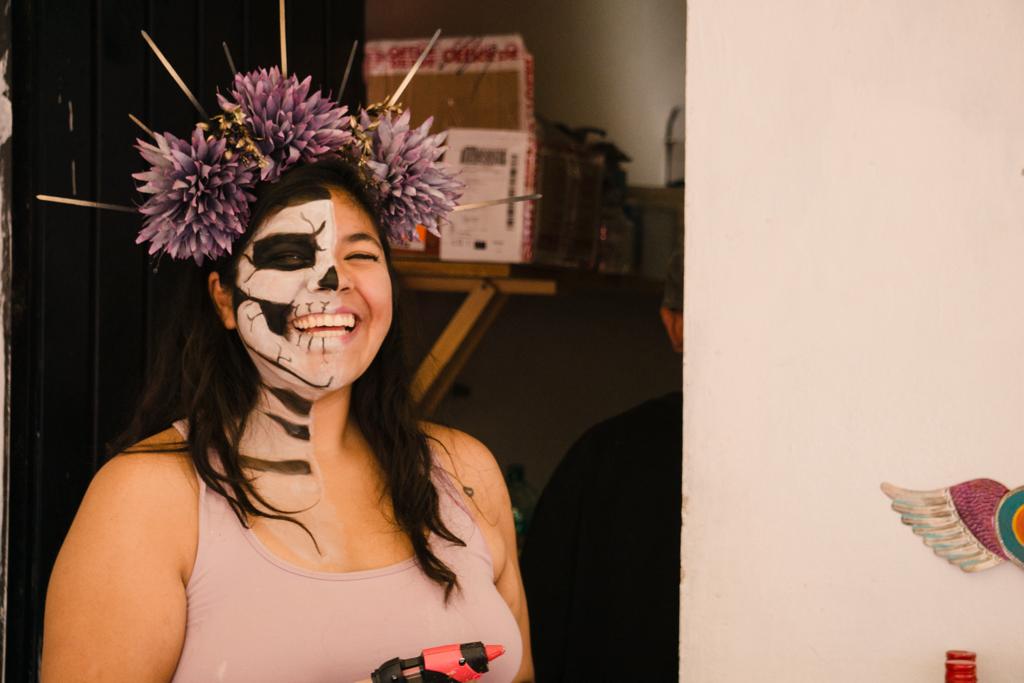
| Face painting on the Alcalá | 100-300 | Simple half-face at the low end. Or buy paint at the market and do each other’s at the hostel |
| Pan de muerto and hot chocolate | Under 100 for both | The market comedores, not the Alcalá cafes |
| A full meal in a market comedor | Around 100 | Mercado 20 de Noviembre, two blocks from us; a tlayuda feeds two if you are honest about it |
| Guided cemetery tour | 400-900 | Skip it. It buys transport and company, not entry |
| Mezcal handed to you in the street | 0 | Accept once, decline politely after that |
The one real cost of this week is a bed, and it is the one thing you cannot improvise. Every hostel and hotel in the centre is priced for the season and most of the centre is full by the end of September. Check the live price at our booking page, and if the city is gone, look at the villages – Tlacolula, Mitla, Etla – where there is more room and, depending on who you ask, a better celebration.
What not to pay for
- Cemetery entry. Free. Anyone selling you a ticket is selling you a ride.
- Comparsa access. There is no ticket, no seated area and no VIP anything. You stand in the street and a band walks past you.
- A photography workshop in a graveyard. Your phone works fine. Ask before you point it at a family, and put it away when someone is crying.
- A costume. The market sells face paint and marigolds for a few pesos. Most travellers who look good at midnight did it in the hostel lounge for forty pesos of paint.

Doing it from Maka
We are in the Centro, a few blocks from the Zócalo and Mercado 20 de Noviembre, which matters more this week than any other: the Panteón General is a walk, the Alcalá is a walk, and the barrio comparsas in Jalatlaco and Xochimilco are a walk. Breakfast is homemade and included, which quietly removes one paid meal a day from your week.
Reception keeps a list of which comparsa is going out where, because guests come back at two in the morning and tell us. On the 31st there are always four people in the lounge who want to split a taxi back from Xoxocotlán, and the rooftop bar is where that gets organised, usually over the cheapest beer in the centre. Our regular trips – Hierve el Agua, Monte Albán, the Sunday market, the mezcal palenques – keep running through the week; they are on activities and day trips, and Hierve el Agua is a good use of 2 November when the city is asleep. Everything on our calendar is open to non-guests too, so you can use us as a base even if you end up sleeping somewhere else.
Dates, nights and what to book first are all on our Day of the Dead page. Bring cash: the ATMs in the centre run dry on the 31st, and nothing in a village cemetery takes a card.
Frequently asked questions
Is Day of the Dead in Oaxaca free to attend?
Yes. The cemeteries, the comparsas, the sand tapestries, the altars and the state programme of concerts and parades are all free. You pay for a bed, for food, for transport to the village cemeteries and for face paint if you want it.
How much money do I need per day during Day of the Dead in Oaxaca?
Beyond your bed, a frugal day is roughly 200 to 400 pesos: a market meal for around 100, colectivos at 15 to 20 a ride, and a share of a taxi home on the two late nights. Face paint and mezcal push it up. Numbers checked in early October 2026 and they move during the week.
Do you have to pay to enter the cemeteries in Oaxaca on Day of the Dead?
No. Entry is free everywhere, including Xoxocotlán, Atzompa and the Panteón General. Some village cemeteries ask visitors for a small voluntary cooperación at the gate, so carry twenty-peso coins. Tours sell transport and a guide, not access.
Where can I see a comparsa in Oaxaca City for free?
Jalatlaco and Xochimilco are the barrios closest to the centre and both hold comparsas on several evenings in the last week of October. Times are not published; they are decided locally and spread by word of mouth, so ask at your hostel on the day and follow the brass band.
Is there a free Day of the Dead parade in Oaxaca?
The state government has run a free Convite parade on 1 November in recent years, in the last edition at 18:00 from the Fuente de las Ocho Regiones to the Alameda de León. The full programme for 2026 is normally published in mid-October on the Oaxaca state government site, so confirm the date and time there.
Which museums in Oaxaca City are free?
The Centro Fotográfico Manuel Álvarez Bravo, the Museo Textil de Oaxaca and the Centro Cultural San Pablo all have free entry, and all three usually put up large altars for the season. Holiday opening hours vary, so check the door before you plan a day around them.
Book a bed at Maka · 10% off directStaying in Oaxaca?
Maka is a social hostel a few blocks from the Zócalo, with the tallest pool in Oaxaca, free homemade breakfast and a different activity every day. Book direct with code DIRECT10 and pay 10% less than on the booking sites.
Check beds and prices See this week’s activities