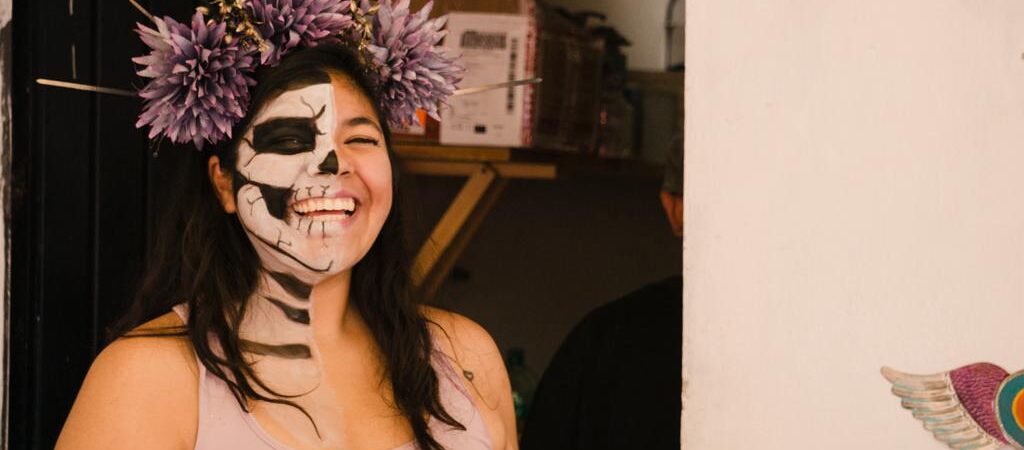
Day of the Dead in Oaxaca runs from roughly 25 October to 2 November 2026, and the nights that matter are Saturday 31 October (the cemetery vigils in Xoxocotlán and Atzompa), Sunday 1 November (the Panteón General in the city and the all-night comparsas in the Etla villages) and Monday 2 November, when the souls leave and the city slowly goes back to normal. Everything in the street is free. The things that cost money are a bed, a taxi back from a cemetery at 2 am, and a face painter on the Alcalá.
This is the guide we give people at reception. It is written for someone arriving with a backpack, a few thousand pesos and no tour booked.
The dates, and what happens on each
Oaxaca does not do Day of the Dead as a single parade. It is a week of small things building up to two nights in the cemeteries.
| Date (2026) | What happens | Where to be |
|---|---|---|
| Sat 24 – Fri 30 Oct | Altars go up in houses, shops and the markets. Sand tapestries (tapetes de arena) appear on the Plaza de la Danza. Comparsas start in the barrios most evenings. | Mercado de Abastos for the cempasúchil and pan de muerto, Plaza de la Danza, Jalatlaco after dark |
| Sat 31 Oct | Día de los Angelitos. Families keep vigil for children who have died. The old and new cemeteries of Santa Cruz Xoxocotlán fill with candles from about 9 pm until dawn; Santa María Atzompa does the same on its hill. | Xoxocotlán (10 minutes south of the city), Atzompa |
| Sun 1 Nov | Todos Santos. The adults arrive. The Panteón General in Oaxaca City holds its vigil tonight; in San Agustín Etla and San José Etla the muerteadas (brass bands, costumes, dancing) go on until sunrise. | Panteón General (walkable), the Etla villages (colectivo or taxi, 30-40 minutes) |
| Mon 2 Nov | Fieles Difuntos. Families eat together at the graves in the daytime, the altars are taken down over the following days. A quiet day; good for Monte Albán. | Any village cemetery by day, then rest |
Those dates are the fixed ones. Comparsa times are not published anywhere official; they are decided by the barrio and spread by word of mouth, which in practice means asking at the hostel on the day. We keep a list at reception and on the Day of the Dead page.
Check beds at Maka This week’s activities
What is free
Almost all of it. You can have a complete Day of the Dead in Oaxaca spending money only on food and transport.
- The comparsas. Neighbourhood parades with a brass band, dancers in costume and a lot of mezcal passed around. Jalatlaco and Xochimilco are the barrios closest to the centre; walk up after 8 pm and follow the music. Nobody charges anything.
- The cemeteries. Entry is free everywhere. Xoxocotlán and the Panteón General are the two everyone visits, so they are also the two with food stalls, music outside the gates and a lot of other travellers. Atzompa is quieter and the view of the candles from the hill is the best of the three.
- The sand tapestries on the Plaza de la Danza and the big altars in public buildings, museums and hotel lobbies along the Alcalá.
- The markets. Mercado de Abastos in the last week of October is the event in itself: whole aisles of marigolds, sugar skulls, chocolate and pan de muerto with the little painted face on top. Go in the morning, go with a friend, keep your phone in your front pocket.
What it costs
At the time of writing, these are the numbers we see guests spend. Prices in Oaxaca go up for the week, but not by much once you are off the Alcalá.
| Item | Rough cost (MXN) | Notes |
|---|---|---|
| Colectivo to Xoxocotlán | 15-20 each way | From the stands near the Periférico and the Abastos market; they run late on the 31st but you may wait |
| Taxi back from Xoxocotlán at night | 150-250 | Agree the price before you get in; share with three others from the hostel |
| Face painting on the Alcalá | 100-300 | Simple half-face at the low end, full catrina with glitter at the top; cash |
| Pan de muerto and hot chocolate | 40-70 | At the market or any bakery; the chocolate is better in the market |
| Organised cemetery tour | 400-900 | Buys you a van and a guide, not access; everything they show you is open to anyone |
| Mezcal in the street | 0 | It will be offered; say yes once, decline politely after |
A bed is the real cost. Every hostel, hotel and Airbnb in the centre prices this week far above the rest of the year and most are full by September. If you are reading this in October and have nothing booked, check the live price at our booking page and then check the villages (Tlacolula, Etla, Mitla) where there is more room and the celebrations are arguably better. Prices there are a fraction of the city’s.
How to get to the cemeteries without a tour
Xoxocotlán, Saturday 31 October
Colectivos marked Xoxo leave from the stands by the Periférico near the Abastos market; ask the driver for the panteón. They take 15-20 minutes. Go between 9 and 11 pm when the candles are lit and the families have settled in. There are two cemeteries a few hundred metres apart: the old one (Panteón Viejo) is smaller and more atmospheric, the new one bigger and busier. Coming back after midnight, colectivos thin out and taxis know it; a group of four from the hostel splitting a 200-peso ride is the normal solution.
Panteón General, Sunday 1 November
This one you walk to. It is about 20 minutes east of the Zócalo, past the Jalatlaco barrio; any local can point you. The street outside turns into a fair, with food, a stage and a lot of people, and inside the niches in the walls are lit with candles. It is the easiest cemetery night for a first-timer, and the one where you can leave whenever you want.
Atzompa and the Etla villages
Santa María Atzompa’s cemetery sits on a hill and the vigil on the 31st is the one photographers go to. Colectivos leave from the same Periférico area; the last ones back are early, so this is a taxi-home night. The Etla muerteadas on the night of 1 November are an all-night street party with bands moving between houses; arrive by 10 pm, bring a jacket, and either stay until the first colectivos at dawn or agree a taxi in advance.
How to behave in a cemetery
You are a guest at a family’s dinner with their dead. Most families are genuinely happy to have you there, and many will offer you food or mezcal, but the rules are simple. Do not step on graves. Do not photograph people without asking, and never use a flash on a vigil. Keep your voice down inside the walls even when the party outside is loud. Dress warmly rather than in costume; the painted faces belong on the Alcalá and in the comparsas, not at a graveside at midnight. If you are invited to sit, sit.
Doing it from Maka
We are a few blocks from the Zócalo, which puts the Alcalá, the Plaza de la Danza and the Jalatlaco comparsas within a 15-minute walk and the Panteón General within 20. During the week we run the usual schedule, so Hierve el Agua and Monte Albán still happen in the daytime, and the evenings are for the cemeteries, usually as a group leaving from reception so the taxi maths works. Face painting happens on the terrace most afternoons. The current schedule is on the activities page.
One honest note: Maka sells out for Day of the Dead every year, and prices for the week are set well above the rest of the year, like everywhere in the centre. If a bed shows as available, that is the real price for that night; if nothing shows, the villages are your best option and you can still come to the pool party.
What to pack for the week
- A warm layer. Oaxaca nights in late October drop to around 10 degrees and you will be standing still in a cemetery for hours.
- Cash in small notes. Colectivos, face painters and market stalls do not take cards, and the ATMs near the Zócalo run dry over the weekend.
- A small bag worn in front, or nothing at all. The crowds on the Alcalá on the 31st are the one place in Oaxaca where pickpockets work.
- Comfortable shoes. You will walk more than you expect and the cemetery paths are uneven and dark.
- A refillable bottle; the hostel has filtered water and the street vendors charge festival prices.
Frequently asked questions
What are the exact dates of Day of the Dead in Oaxaca 2026?
The core days are 31 October, 1 November and 2 November 2026. In Oaxaca the celebrations start around 25 October with altars, sand tapestries and neighbourhood comparsas, and the main cemetery vigils are the nights of 31 October (Xoxocotlán, Atzompa) and 1 November (Panteón General, the Etla villages).
Is Day of the Dead in Oaxaca free?
Yes. The comparsas, cemetery vigils, sand tapestries, altars and markets cost nothing to see. You pay for transport (15-20 pesos by colectivo, 150-250 for a late taxi), food and optional face painting. Organised tours sell convenience, not access.
Do I need to book a hostel in Oaxaca for Day of the Dead in advance?
Yes, as early as you can. Most beds in the centre are gone by September and prices for the week are far above the rest of the year everywhere. If the city is full, look at Tlacolula, Etla or Mitla, where the celebrations are strong and there is more room.
Is it okay for tourists to go into the cemeteries?
Yes, visitors are welcome and often offered food or mezcal. Stay off the graves, ask before photographing anyone, do not use flash, keep your voice down inside the walls and leave the costume for the parades.
How do I get to Xoxocotlán cemetery from Oaxaca City at night?
Colectivos marked Xoxo leave from near the Periférico and the Abastos market and take 15-20 minutes. They run late on 31 October but thin out after midnight, so plan to share a taxi back, which costs 150-250 pesos for the car.
What is the weather like in Oaxaca at the end of October?
Warm and mostly dry days around 25 degrees, cool nights around 10 to 12 degrees. The rainy season is ending, so an evening shower is possible but not common. Bring a warm layer for the cemetery nights.
Book a bed at Maka · 10% off directStaying in Oaxaca?
Maka is a social hostel a few blocks from the Zócalo, with the tallest pool in Oaxaca, free homemade breakfast and a different activity every day. Book direct with code DIRECT10 and pay 10% less than on the booking sites.
Check beds and prices See this week’s activities